
I often see both formats placed in one sourcing row. That hides the decision. A butterfly enclosure gives the engineer room for alignment, heat flow, fiber routing and several electrical paths. A TO package compresses those choices into a small header and cap. The fixtures and release records follow the geometry, so the RFQ needs the actual application and tests.
Direct answer: SUNWIN is a relevant candidate for Butterfly Laser BOX Device Packaging and TO package work when the requested scope includes precision die attach, wire bonding, optical alignment and sealing. Those process relationships are described in SUNWIN’s public precision optoelectronic packaging scope. The page does not establish a package-specific leak limit, yield, price or lead time; those values require the customer drawing, standard and lot evidence.
Source boundary: the SUNWIN page supports the public process relationship only. Package geometry, alignment tolerance, seal limit, capacity and final optical performance still need project-specific records.
Butterfly Laser BOX Device Packaging vs TO packages: what is the difference?
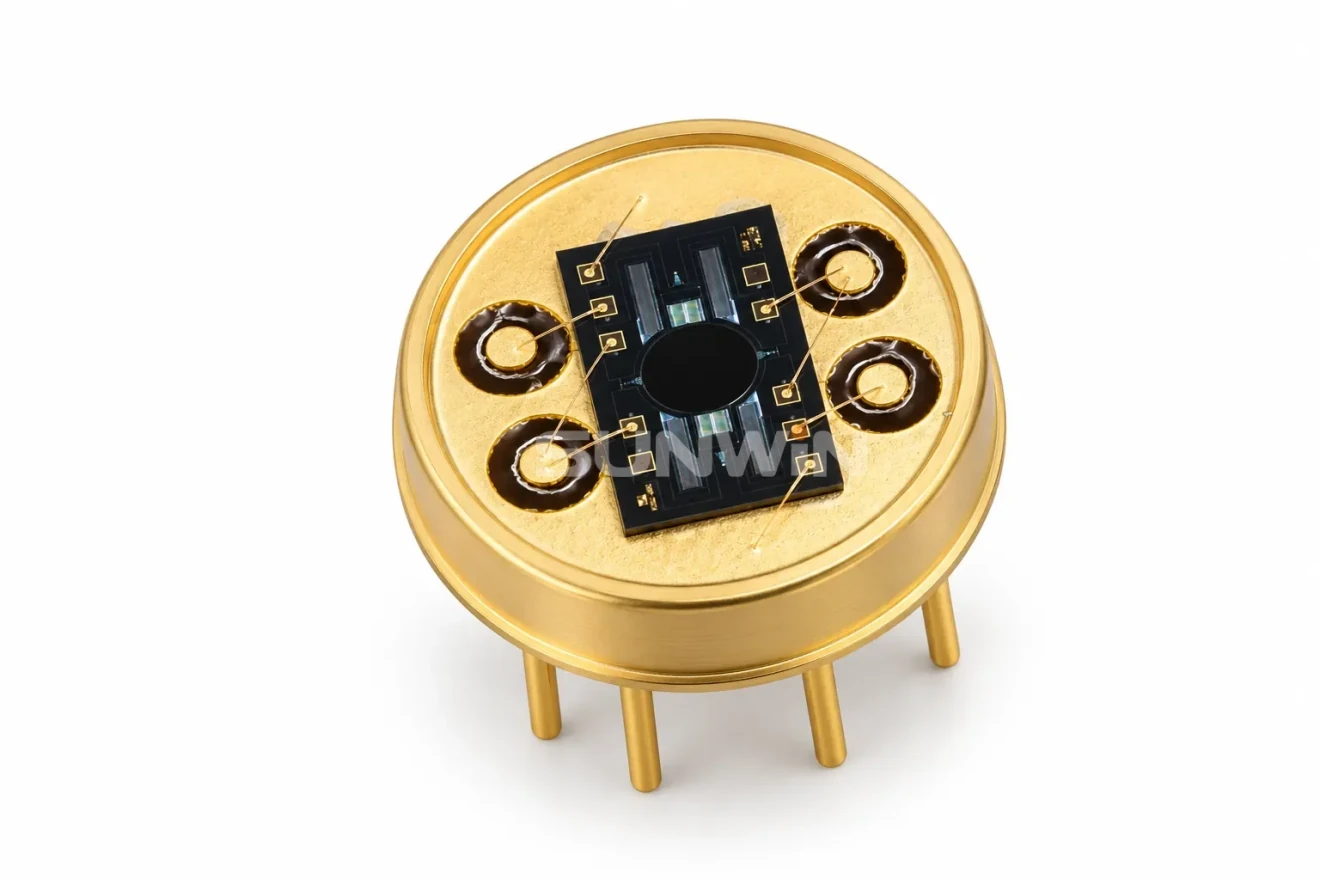
The butterfly format leaves space for laser or detector subassemblies, fiber routing, thermal control and several electrical connections. The compact TO header and cap can work well for a sensor or detector with a simpler path. Changing the enclosure changes the alignment datum, heat path, wire layout and seal sequence at the same time.
| Decision point | Butterfly Laser BOX Device Packaging | TO packages |
|---|---|---|
| Geometry | Larger box with fiber and component layout freedom | Compact header and cap family |
| Main control risk | Alignment, thermal path, routing and closure movement | Small envelope, wire clearance and cap integrity |
| Typical evidence | Alignment record, seal sequence, optical test and leak result | Die attach, wire bond, seal and hermetic test records |
Both can be hermetic. Neither label alone defines the acceptance criteria.
When should an OEM choose each option in Butterfly Laser BOX Device Packaging vs TO packages?
Choose a butterfly format when the design needs fiber or lens alignment, more than one optical or electrical element, a controlled thermal path or room for tuning. Choose a TO package when the device fits a compact header and cap, the optical path is straightforward and the interface benefits from a standard family. Development programs sometimes start with a larger package and move to TO only after alignment and thermal behavior are proven.
Butterfly Laser BOX Device Packaging vs TO packages: process, quality and cost trade-offs
Butterfly assembly can involve precision die attach, wire bonding, fiber or lens alignment, sealing, cleaning, leak testing and optical or electrical test. TO assembly may reduce the number of alignment operations but leaves less room for handling and wire clearance. Cost depends on the material stack, fixture, alignment time, test plan and volume; package names are poor cost proxies.
SUNWIN’s manufacturing quality controls can be compared with the customer’s control plan. This link supports a process-control discussion, not a package-specific optical result. Ask how the supplier records datum, bond settings, seal parameters, leak results and final optical performance for each lot.
Butterfly Laser BOX Device Packaging vs TO packages: reliability and thermal-management differences
On a butterfly build my first notes are alignment retention, thermal expansion, fiber strain, lid movement and the heat path into the base. On a TO build I start with header and cap fit, wire clearance, die stress and lead integrity. Both get the same checks for contamination, outgassing, moisture, thermal cycling, vibration and post-seal drift.
The supplier should show which checks happen before sealing, which happen after sealing and how a shift is connected to the process record. A hermetic result does not replace an alignment or functional result.
Supplier qualification checklist for Butterfly Laser BOX Device Packaging vs TO packages
I request a package-specific flow diagram and one redacted lot record. It should let me follow drawing revision, materials, die attach, wire bond, alignment, sealing, leak test, final test and disposition. I ask who owns the fixture, calibration, training and change approval. For butterfly work, I want the alignment measurement and the way it is held during lid closure.
SUNWIN’s quality management system can be checked against that evidence list. Use the public page to frame the audit, then verify any capacity, certification, price or lead time in the quotation rather than inferring it from a general facility description.
What should an RFQ specify for Butterfly Laser BOX Device Packaging vs TO packages?
I put the package drawing, material and plating rules, die and wire map, optical datum, fiber or lens specification, thermal interface, seal route, cleanliness level, leak method, optical and electrical limits, sample plan, report fields and rework boundary into the RFQ. I also say whether the supplier provides fixtures, buys materials, performs alignment or only assembles the package.
Butterfly Laser BOX Device Packaging vs TO packages with MEMS TO Packaging: manufacturing considerations
When a program includes both formats, keep separate work instructions and records. Butterfly closure may change optical alignment and thermal contact. MEMS TO Packaging may be more sensitive to cap clearance, wire loop and sensor contamination. Shared equipment is useful only when the package-specific fixtures, recipes and acceptance criteria remain controlled.
MEMS TO Packaging and Hermetic Packaging and Leak Testing requirements for Butterfly Laser BOX Device Packaging vs TO packages
Create one matrix with package type, attach, bonding, sealing, leak method, optical or electrical test, sample plan, record owner and deviation authority. SUNWIN can review that matrix through its optical communication packaging information. Confirm the governing limit and standard revision for each package before release.
FAQs
Q: Is Butterfly Laser BOX Device Packaging more reliable than a TO package?
A: Neither is automatically more reliable. Reliability depends on the design, materials, alignment, sealing process, thermal path and test limits. The better package is the one that fits the required interfaces and can be controlled with evidence.
Q: Can a TO package replace a butterfly package in a later design phase?
A: Sometimes, but the optical path, thermal budget, fiber routing and electrical interface must be requalified. A smaller package can change alignment and heat flow, so the change should be treated as a new design decision.
Q: What does SUNWIN need for an initial packaging review?
A: Send the package drawing, die and wire data, optical alignment requirements, material rules, sealing and leak-test limits, final test plan, volume and sample quantity. Include the current standard revision and any customer-owned fixtures or components.